Hedging with options has become structurally harder

Hedging with Nifty options has gotten structurally harder, especially around events like the Iran-Israel-US conflict. Serious hedgers typically use contracts that are 30 days or longer. But thanks to weekly expiries, the OI profile of the market has changed dramatically.
In 2015 (Graph 1), the 0–7 day bucket was 18.8% of index OI. Today it’s 60.4%. The 16–30 day bucket has fallen from ~30% to 12%.
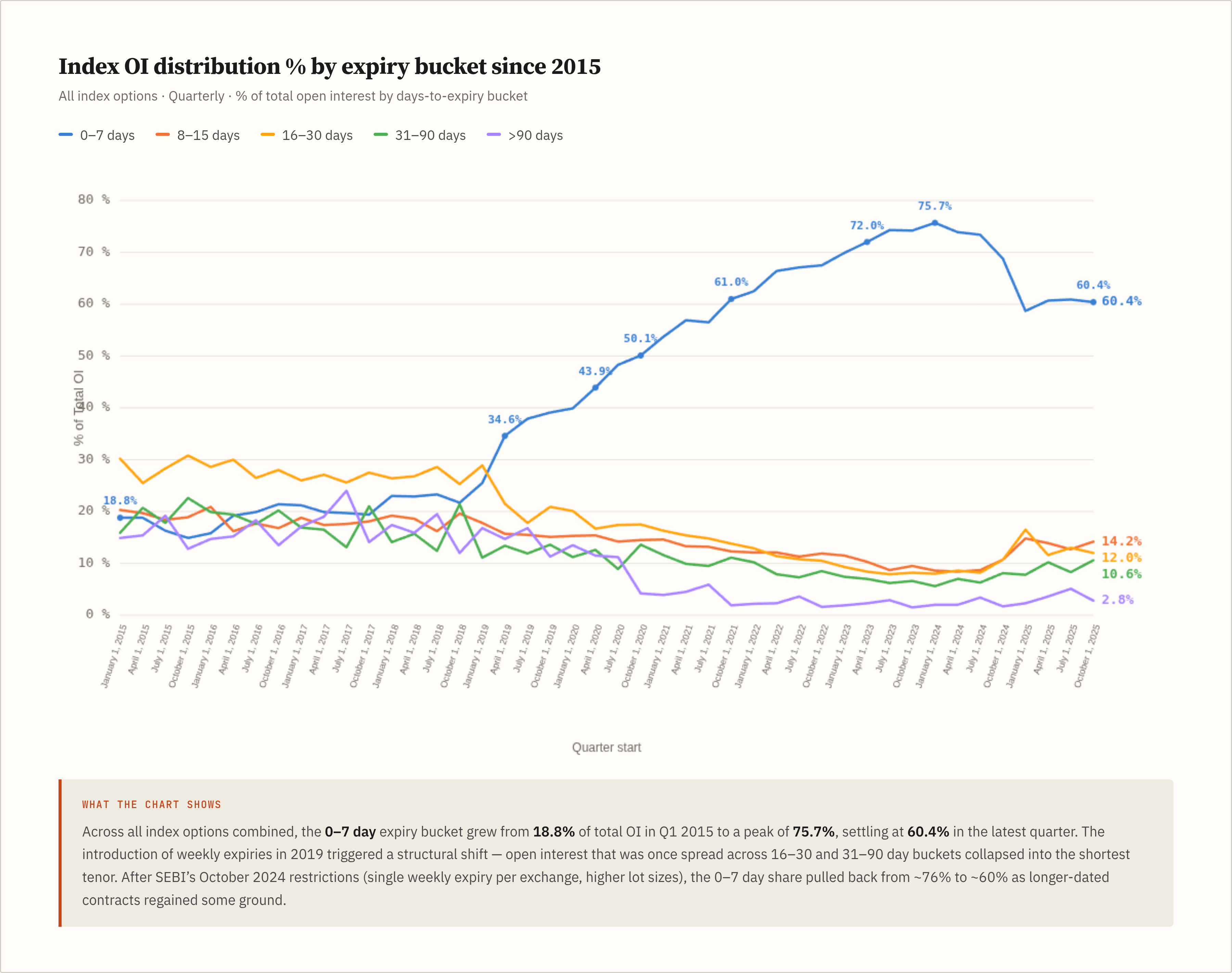
The volume picture is even more dramatic. Total index options contracts surged from 564M per quarter in 2015 to a peak of 34.9B in Q3 2024, a 62x increase driven almost entirely by the sub-7-day bucket (Graph 2).
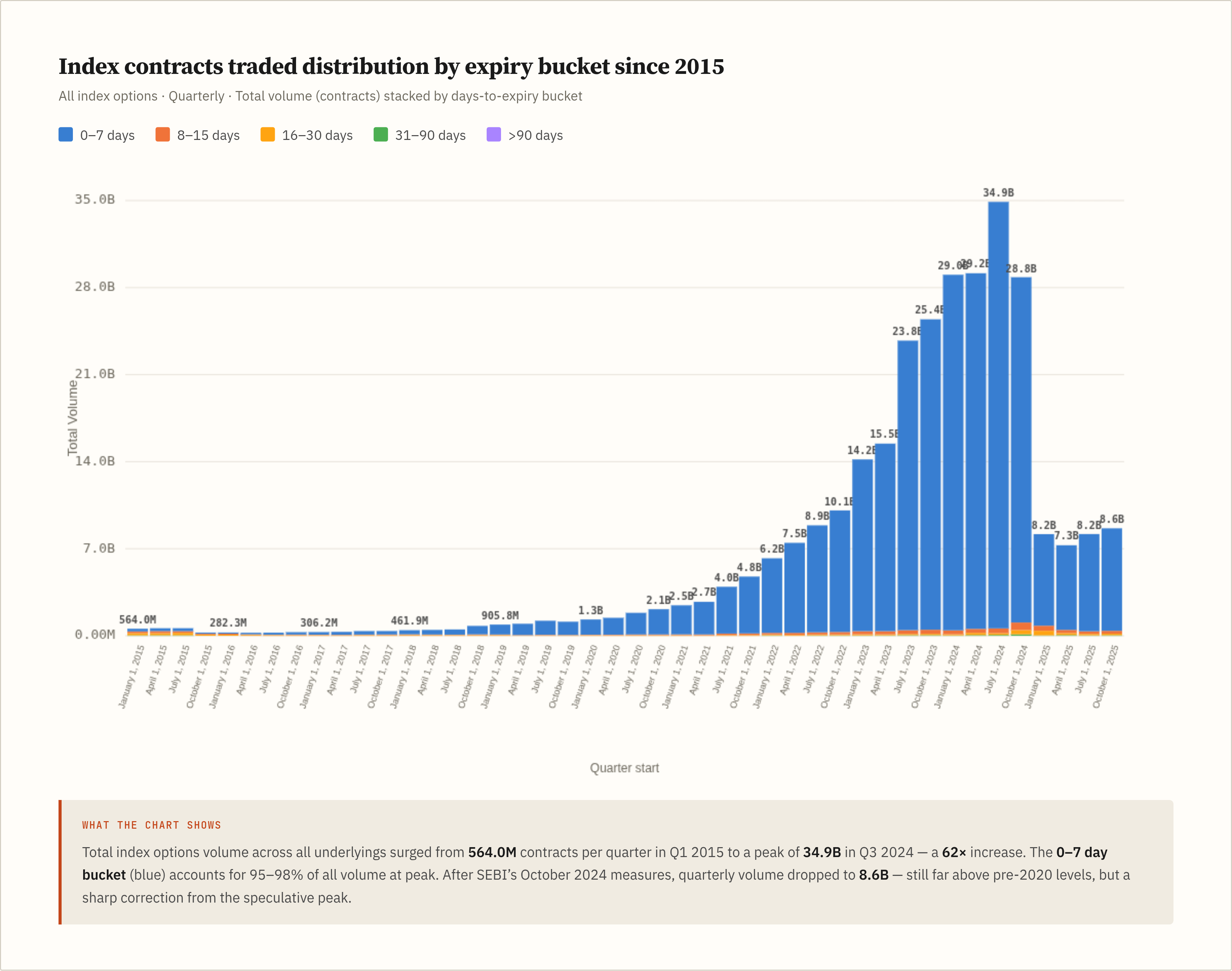
The market has structurally shifted from hedging to speculation. Liquidity has exploded, which is good. But genuine hedging has gotten harder because liquidity has dried up at the longer end. When volatility spikes, buying meaningful insurance is difficult precisely when people need it most.
This lopsided OI structure is a problem. A healthy market needs to offer solutions across different risk horizons, not just the next seven days. Serious participants need depth at the 30, 60, and 90-day tenors too.
So how do you fix this? Lower STT, lower exchange charges, lower brokerage for positions beyond 30 days is a reasonable start (Don’t ask us yet, hold on 😃). Small price signals that make longer-dated contracts cheaper to hold should gradually draw volume back toward the tenors where real hedging happens.
nothing more is needed just give retail people only span margin for credit/debit spread and strategy around it and i understand exchange risk n clearing corp risk here increase the margin in last 2 days of expiry it is simple but charging 40k to 50k for a nifty spread where losses are fixed at let say approx 5k to 8k it is lunatic no where in the world margin are so high....150% of max risk is also fine but fixed this 4.4x of max risk that too floating.
Meaning ful thought. Regulator can try it so that meaningful participation in long tenor contract can be built up over a period of time.